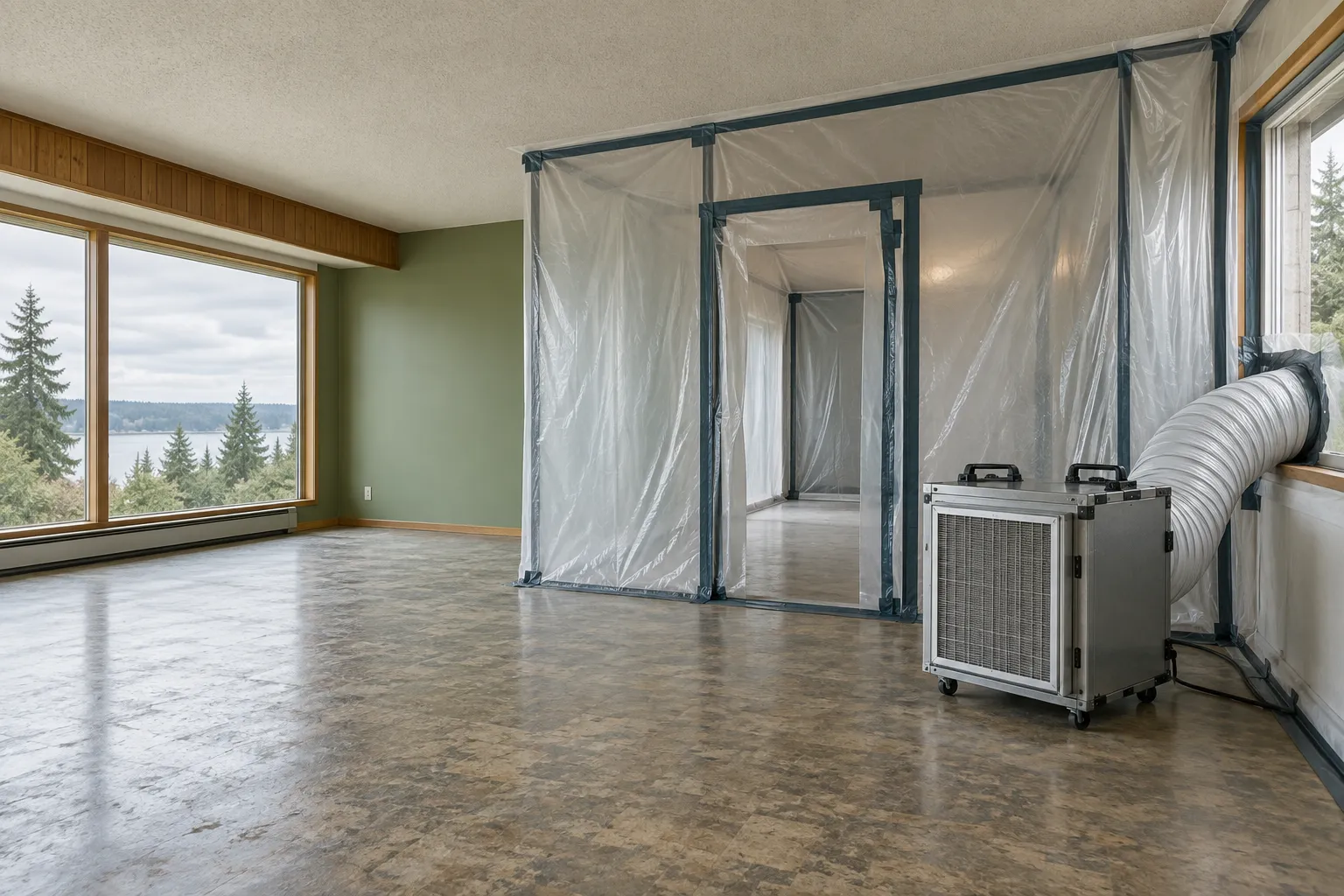
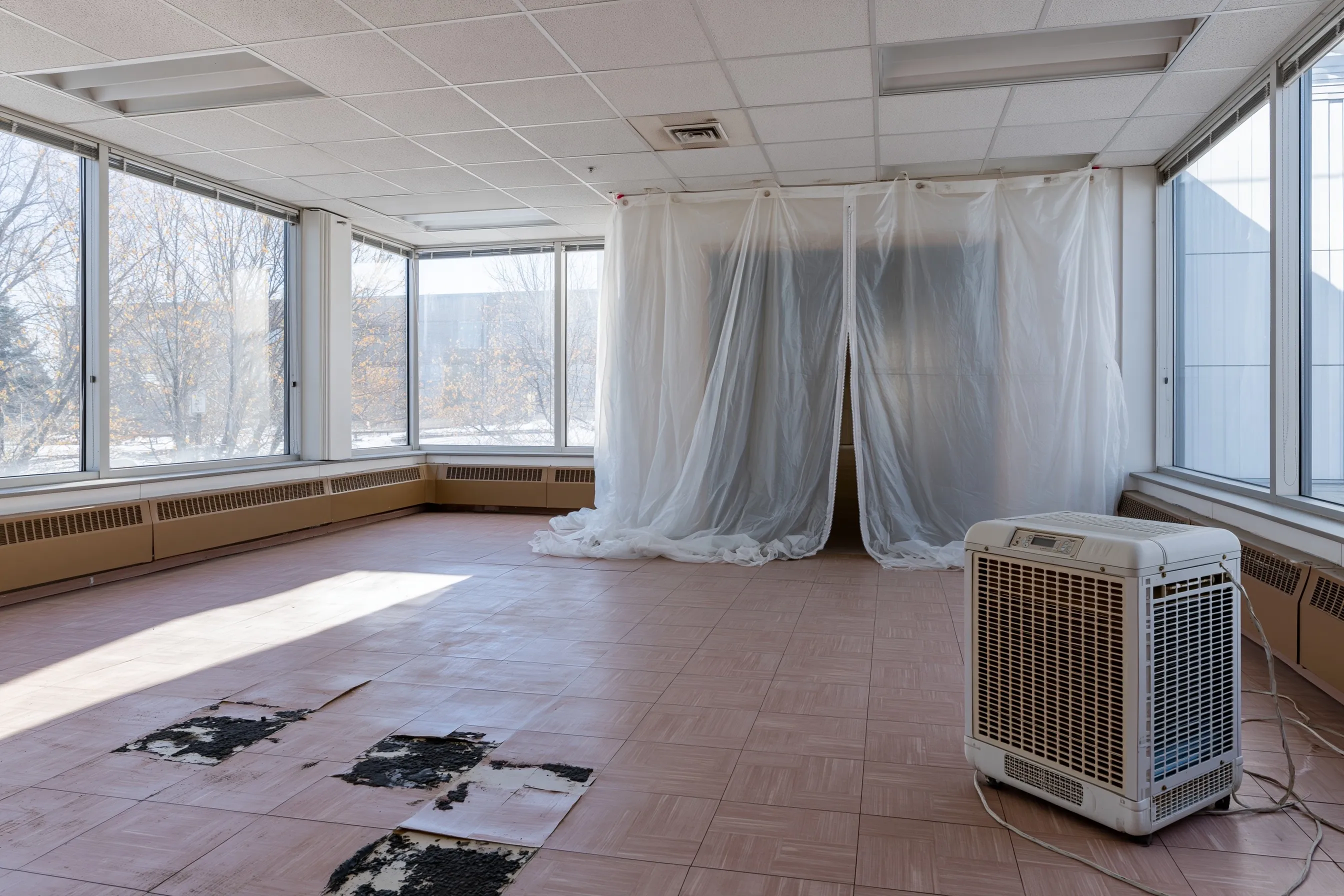
Asbestos removal options
Asbestos popcorn ceiling removal
Ceiling texture gets a lab test before anyone scrapes, and so does every layer the job will reach. Paint over the popcorn, patching compound and old repair spots may each contain something different, and a stipple pattern tells you nothing about what is in it. The results decide which ceilings come down, so a hallway is not handled like a bedroom just because they look alike. We take the ceiling back to bare. Patching, new texture and paint are a separate job, sorted out before we begin.
Asbestos floor tile and mastic removal
In one room you can have floor tile, sheet vinyl with a backing layer and the adhesive that holds them down, and any of them may contain asbestos. You cannot judge it by tile size or color. We ask which rooms are changing and whether anything was ever laid over the old floor or patched into it, then test each layer. The removal follows the tested areas only, and before we start we tell you what shape the subfloor will be in and who gets it ready for the new flooring.
Asbestos insulation removal
Wrap on heating pipes, the jacket on an old boiler and loose fill in the attic each need their own setup. Leave suspect insulation where it is until the test shows what needs special handling. On a heating system, we work out how to reach the pipes, how long the heat must be off and when whoever is replacing or repairing the pipework can start. In the attic, we look at what stays, how we get in and what new insulation goes back once the old fill is out.
Asbestos siding and roofing removal
Outside, we test cement siding, roofing and similar materials before they are replaced or the building is torn down. We need to know which sides of the building are changing and whether older siding sits under the current layer. Openings for windows or doors, trim, and a garage or shed close by can all move the edge of the removal. We plan how to reach the work, how the pieces come off whole, and what keeps rain off the wall until the new siding goes on.
Asbestos abatement before renovation and demolition
The survey has to match the job. For a remodel, that means the rooms and surfaces you are changing; before a tear-down, it means the whole building. Get us the drawings before demolition starts and point out every opening and layer they touch, because a small update can still reach one important material. We then set the order of removal and any notices, and tell you the day your remodeler or demolition contractor can take over. For a tear-down in Algona, we get the survey and abatement records ready for the city's demolition application.
Commercial asbestos abatement
In a commercial or shared building, the work has to fit the people still using it. A suite remodel can reach ceilings, floors and partitions while the business next door stays open. We need the whole plan, not just the lease outline, and we check the shared halls, air systems and delivery doors that a room-only material list would miss. The survey and removal are then scheduled around how the building is used, and we confirm up front the paperwork the owner, tenants and following trades each need.
Demolition records for the city application
Algona's demolition application asks for the hazardous inspection and a record of the asbestos abatement, so we have both ready before you apply. Ask the city for its current form and the records it wants before you set a demolition date, because fees and timing can change.
If a whole building is coming down, we survey every structure on the lot against the demolition plan. If you are only remodeling inside, show us which surfaces and layers will be opened up, and check with the city which application fits; it may not be the demolition form. A whole building needs a full survey; a report on one floor or ceiling is not enough. The city application and the air agency's rules are separate steps, and we check both.
What we need from you
Show us all the work
Show us the whole plan, not just the room name. Point out the surfaces that will be cut or torn out, anything that might be hidden behind them, and any garage, shed or other building in the work. If you have an older asbestos report, send it, and we will check whether it covers this job. A test in one room tells you about that material only. If the plans change, let us know before the work gets to that part of the house.
Who does what
Before work starts, we go over the materials coming out, the work area and where it meets rooms people are still using or other trades' work. We explain how we get in and out and what you cannot use while we work. We also settle who files the notices, who handles the waste and who does the repairs after. That matters most when several contractors are on the job under separate contracts.
When the job is done
When we finish, you get the records for the job and we tell you when the next trade can start. Waste records, our visual check and any air test each show something different, so you get the ones that apply to your job. We also note any asbestos staying in the building and what the next contractor should leave alone. File the paperwork with your property papers so a future remodel starts from facts, not memory.
Survey and project requirements in Washington
The Puget Sound Clean Air Agency has one set of rules for remodels and another for demolition. We check which applies to your Algona job and set up the survey, notices and waste disposal to match. A building permit is not an asbestos survey; you still need one.